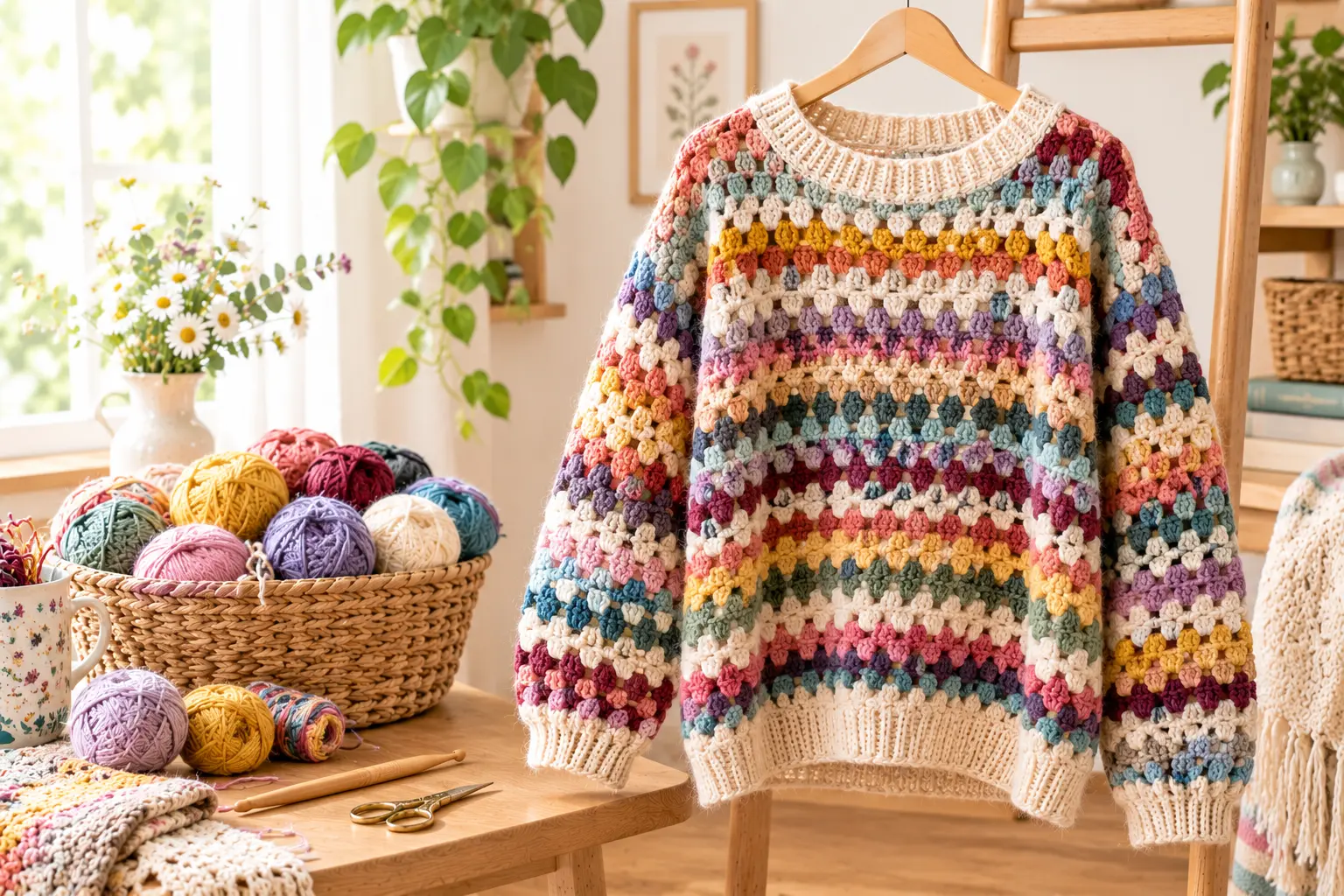
Scrap Yarn Crochet Pullover – Free Pattern & Video Tutorial
The tutorial video is at the bottom of the article.👇
Do you have a basket filled with leftover yarn from blankets, scarves, and other crochet projects? Instead of letting those colorful scraps sit unused, why not turn them into something you can wear? A scrap yarn crochet pullover is a creative way to give leftover yarn a fresh purpose while making a unique, handmade sweater.
The best part is that no two pullovers need to look alike. You can combine soft neutrals, bright colors, or earthy shades to create a design that reflects your personal style. With a little planning, basic crochet skills, and the right pattern, your yarn leftovers can become a cozy addition to your wardrobe.
In this guide, you’ll discover the materials you need, useful crochet techniques, construction tips, and ideas for customizing your pullover. Follow the written pattern and matching video tutorial to help you along the way.
Why You’ll Love This Scrap Yarn Crochet Pullover Pattern
A scrap yarn crochet sweater is more than a practical stash-busting project. It gives you the freedom to experiment with color while creating something useful.
Here are a few reasons to try it:
- Use leftover yarn: Make room in your yarn stash by using compatible scraps from previous projects.
- Create a unique design: Combine stripes, color blocks, or repeating shades to suit your taste.
- Make a wearable handmade piece: Style your pullover with jeans, skirts, or your favorite everyday outfits.
- Customize your look: Adjust colors and, where the pattern allows, sleeve length or garment length.
- Enjoy a creative challenge: Learn how different yarn colors work together in a larger project.
You can choose a coordinated palette for a polished look or embrace a colorful, patchwork-inspired style.
Materials for Your Scrap Yarn Crochet Pullover
Before you begin, sort your yarn and gather the necessary supplies. The amount you need depends on the pattern, garment size, stitch design, and yarn weight.
| Material | Purpose |
|---|---|
| Leftover yarn | Creates the pullover’s body and sleeves |
| Crochet hook | Helps you achieve the required gauge |
| Scissors | Trims yarn ends |
| Tapestry needle | Weaves in ends and joins pieces |
| Stitch markers | Mark important stitches and sections |
| Measuring tape | Checks garment measurements |
| Stitch counter | Helps track rows and rounds |
| Blocking supplies | Optional, if suitable for your yarn |
Choosing Yarn for a Crochet Sweater
Start by sorting your scraps according to yarn weight, fiber content, and texture. Smooth yarns of a similar thickness are usually easier to combine because they create a more consistent fabric.
Cotton, acrylic, wool, and blended yarns can all work for crochet clothing, but they behave differently. Some stretch more than others, and their washing requirements may vary. When possible, choose yarns with compatible care instructions.
If you want to mix different yarns, make a small gauge swatch first. This helps you check whether the stitches look even and whether the fabric feels comfortable.
How Much Scrap Yarn Do You Need?
Your yarn requirements depend on the finished size, sleeve length, stitch pattern, and garment construction. Sort and weigh your usable scraps before starting, then reserve enough yarn for both sleeves, the neckline, and the hem.
Keep a few extra scraps nearby for joining and finishing. If you’re following a specific pattern, use its tested yarn estimates rather than guessing.
Crochet Stitches and Techniques You’ll Need
The stitches required will depend on your chosen design. Many crochet pullovers use familiar stitches such as:
- Chain stitch (ch): Creates the foundation for many crochet projects.
- Single crochet (sc): Produces a dense, compact fabric.
- Half double crochet (hdc): Creates a stitch with moderate height.
- Double crochet (dc): Builds fabric more quickly and can create a softer drape.
- Slip stitch (sl st): Joins or finishes work when required.
You may also need to know how to change colors, weave in yarn tails, and join garment pieces.
Why Gauge Matters
Gauge affects the finished pullover’s width, length, and overall fit. Crochet a swatch using the stitch pattern and hook recommended by your instructions, then measure it before beginning the garment.
If your gauge differs from the pattern, try adjusting your hook size as directed. Checking gauge early can save you from discovering that your sweater is too large or too small after completing several sections.
How to Crochet a Scrap Yarn Pullover Step by Step
The exact construction depends on your chosen pattern. Some pullovers use separate front and back panels with individual sleeves, while others are worked partly or entirely in the round.
Step 1: Sort Your Yarn and Plan the Colors
Arrange your scraps by color and thickness. Decide whether you want orderly stripes, contrasting blocks, or a more spontaneous mix.
Planning your color sequence before crocheting helps you avoid running out of a particular shade halfway through a section.
Step 2: Make a Gauge Swatch
Use your selected yarn combination and hook to make a test swatch. Check the stitch and row gauge, then compare your measurements with the pattern.
Choose the size based on the pattern’s measurements and the fit you prefer.
Step 3: Crochet the Body
Follow the pattern’s instructions for the body panels or body worked in the round. Keep your stitch count consistent and check the width as you work.
When changing yarn, secure the new color neatly and weave in loose ends according to the pattern’s finishing instructions.
Step 4: Make the Sleeves
Crochet the sleeves using the specified stitch pattern and measurements. If the design calls for matching sleeves, compare their length and width as you work.
You can repeat colors from the body to create a coordinated appearance.
Step 5: Join the Pieces
Align the body and sleeves according to the pattern. Use the recommended joining method and keep your seams secure without pulling them too tightly.
Where practical, check the garment’s fit before completing all the seams.
Step 6: Finish the Neckline, Cuffs, and Hem
Complete the edges as directed. Weave in loose ends and check that the neckline and cuffs feel comfortable.
If the yarn is suitable for blocking, follow the appropriate method to help the pullover reach its intended shape.
Important: Use the complete, tested pattern for exact stitch counts, shaping, sizing, and assembly instructions. The steps above explain the general process but are not a substitute for a full garment pattern.
Scrap Yarn Crochet Pullover Video Tutorial
A video tutorial can help you understand color changes, joining methods, and garment construction more clearly.
Watch the matching video tutorial here: Embed your crochet pullover video in this section.
Keep the written pattern nearby as you watch. Pause whenever you need to count stitches, check a measurement, or repeat a technique. Make sure the video matches the written pattern so the instructions remain consistent.
Tips for a Comfortable, Well-Fitting Crochet Pullover
Use these practical tips to improve your finished garment:
- Check measurements regularly: Compare the body panels and sleeves with the pattern’s size chart.
- Keep yarn weights compatible: Large differences in thickness can create uneven fabric.
- Secure color changes: Weave in ends carefully to prevent loose tails.
- Plan your yarn supply: Reserve enough scraps for the sleeves and finishing.
- Follow care instructions: Use washing and blocking methods suitable for the yarns in your pullover.
If your fabric feels stiff, your hook may be too small or the yarn combination may not be suitable. If the garment does not fit as expected, recheck your gauge and measurements before assembling the remaining pieces.
Frequently Asked Questions
Can You Make a Crochet Pullover With Scrap Yarn?
Yes! You can make a scrap yarn crochet pullover if you have enough compatible yarn for your chosen size. Sort your scraps by thickness and plan your color arrangement before starting.
Is a Scrap Yarn Crochet Pullover Suitable for Beginners?
It depends on the pattern. Beginners who understand basic stitches and color changes may enjoy a simple design. Garment shaping, gauge, and assembly can require additional practice.
Can You Mix Different Types of Yarn in One Crochet Sweater?
You can, but differences in thickness, stretch, texture, and washing requirements may affect the finished fabric. Test your yarn combination before committing to the full project.
How Do You Make a Scrap Yarn Crochet Sweater Look Coordinated?
Choose a limited color palette, repeat selected shades, and use a consistent stitch pattern. Repeating one or two colors across the body and sleeves can help tie the design together.
How Should You Wash Your Finished Pullover?
Follow the care labels for the yarns you used. If your pullover combines several fiber types, choose a cleaning method appropriate for the most delicate yarn.
Conclusion
A scrap yarn crochet pullover is a wonderful way to turn leftover yarn into a practical, colorful, and personal wardrobe piece. With thoughtful color planning, compatible yarns, and careful attention to gauge, you can create a sweater that reflects your creativity while giving unused materials a new purpose.
Gather your favorite scraps, choose a pattern that suits your skill level, and follow the video tutorial as you work. When your pullover is finished, share your color combinations and tell us how you used your leftover yarn!
For more free crochet patterns, handmade clothing ideas, and creative projects, visit www.crochetwhisper.com and find inspiration for your next make.