Adorable Crochet Baby Toys | FREE Amigurumi Patterns
Creating handmade gifts for little ones is a deeply rewarding experience. Whether you are a seasoned crafter or just starting your journey, making crochet baby toys offers a unique way to provide comfort and joy. These soft, huggable items are perfect for tiny hands and make thoughtful additions to any nursery.
In this guide, we explore the wonderful world of Crochet Amigurumi. We have gathered a collection of free amigurumi patterns that are easy to follow and fun to create. From cuddly woodland animals to charming mushroom rattles, these projects are designed to inspire your next creative session.

Our goal is to help you combine beginner-friendly techniques with practical tips for gifting. You will find everything you need to craft beautiful, safe, and decorative items that parents and babies will cherish for years to come.
Key Takeaways
- Handmade gifts provide a personal touch that store-bought items often lack.
- Safety is the top priority when selecting materials for infant products.
- Beginner-friendly designs allow you to build skills while creating cute nursery decor.
- Soft yarn textures are essential for sensory development in newborns.
- Following simple patterns makes it easy to customize colors and styles.
Choosing Handmade Crochet Toys for Babies
Handmade baby gifts carry a unique warmth that mass-produced items simply cannot replicate. When you invest your time into creating something special, you provide a keepsake that often lasts for generations. These items serve as a tangible expression of love for the newest member of your family or circle of friends.
Why Soft Amigurumi Toys Make Thoughtful Baby Gifts
Soft crochet toys offer a gentle texture that is perfect for a baby’s sensitive skin. Unlike hard plastic alternatives, these plush creations provide comfort during nap times and quiet moments. Choosing natural fibers ensures that the gift is not only beautiful but also breathable and soft to the touch.
“The most precious jewels you’ll ever have around your neck are the arms of your children.”
— Cardinal Mermillod
Age-Appropriate Designs for Newborns, Infants, and Toddlers
Understanding the developmental stage of the child is vital when selecting a pattern. Newborns benefit most from high-contrast colors and simple, soft shapes that are easy to grasp. As infants grow, they begin to explore textures, making varied stitch patterns an excellent choice for sensory development.
Toddlers, on the other hand, enjoy toys that can withstand more active play. You might consider creating slightly larger, more durable figures that can handle being carried around during daily adventures. Always ensure the complexity of the design matches the child’s current level of interaction.
How to Select Simple Shapes Without Small Detachable Parts
Safety remains the most important factor when crafting for the youngest recipients. You should prioritize simple, solid shapes that do not rely on buttons, beads, or other small components. These items can pose a choking hazard if they become loose over time.
Instead of using plastic eyes or accessories, opt for securely embroidered features to give your creation personality. By focusing on integrated designs, you create a safe environment for play. This approach allows you to provide a gift that is both delightful and completely worry-free for parents.
Yarn, Filling, and Tools for Baby-Safe Amigurumi
Building a collection of baby-safe amigurumi starts with understanding which materials are best for little hands. Selecting high-quality supplies ensures that your finished projects are not only beautiful but also durable enough for daily play.
Soft Washable Yarn Options for Crochet Baby Toys
When choosing materials, prioritize fibers that are gentle on sensitive skin and easy to clean. Cotton yarn is a top choice because it is durable, holds its shape well, and creates crisp stitch definition.
Many crafters prefer a high-quality washable yarn blend, such as cotton and acrylic, to provide extra softness. Always check the label to ensure the yarn is machine washable, as this makes life much easier for busy parents.
Choosing Hypoallergenic Fiberfill and Secure Embroidery Thread
The inside of your toy is just as important as the outside. Using hypoallergenic fiberfill helps prevent allergic reactions and keeps the toy safe for infants with sensitive respiratory systems.
For facial features, avoid plastic safety eyes that could pose a choking hazard. Instead, use secure embroidery thread to stitch eyes and mouths directly onto the fabric. This method ensures that no small parts can come loose during rough play.
Essential Crochet Hooks, Stitch Markers, Tapestry Needles, and Scissors
Having the right tools allows you to maintain tight, consistent stitches that keep the stuffing securely inside. A smaller crochet hook than recommended for your yarn weight is essential to prevent gaps in your fabric.
Stitch markers help you keep track of your rounds, while a sturdy tapestry needle is necessary for weaving in ends. Keep a sharp pair of scissors nearby to ensure clean cuts when finishing your work.
Materials to Avoid When Making Toys for Babies
Safety is the primary goal when crafting for the youngest recipients. You should strictly avoid using buttons, beads, or sequins, as these can easily detach and become a choking risk.
Additionally, stay away from loose ribbons, pom-poms, or long yarn tails that could cause entanglement. Always inspect your finished toy to ensure that every element is firmly attached and baby-safe.
Crochet Amigurumi Patterns for Adorable Baby Toys
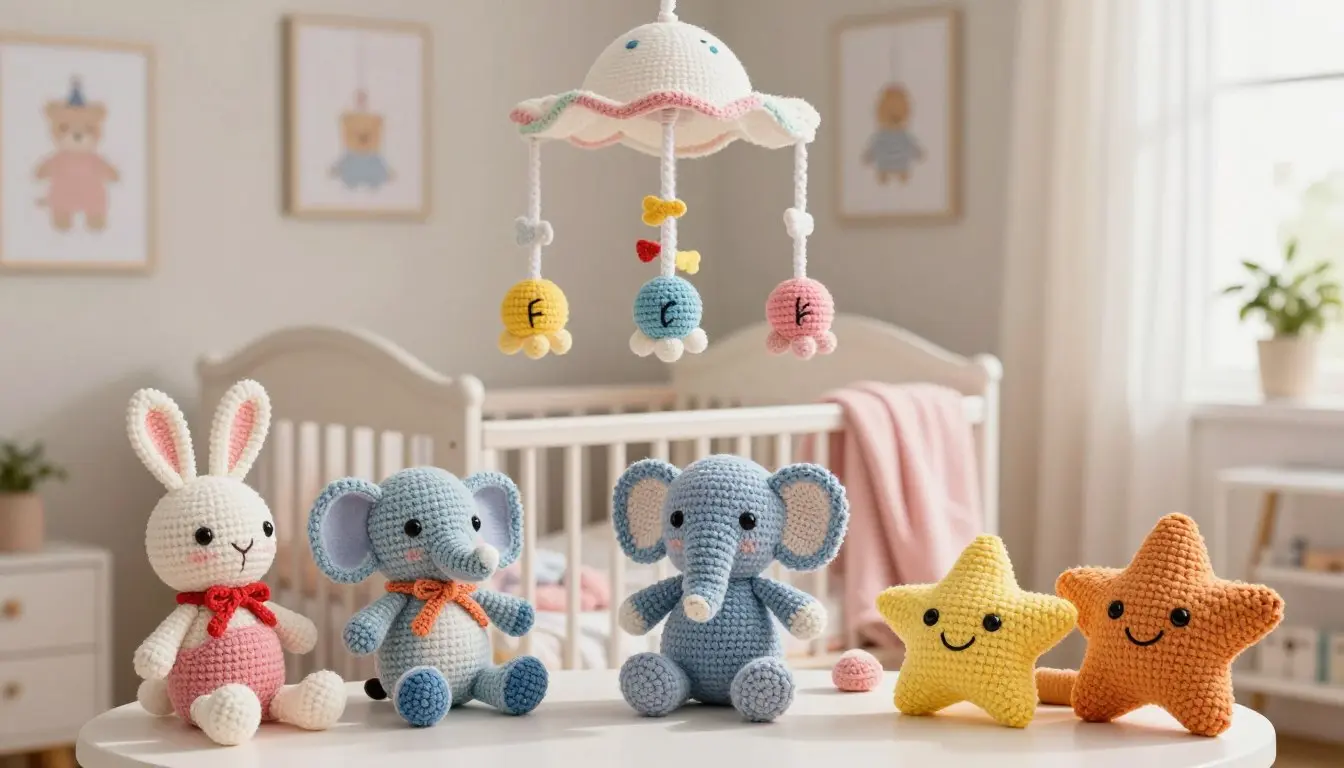
From soft animals to whimsical shapes, these crochet patterns offer endless inspiration for your next project. Each design focuses on gentle textures and secure construction to ensure they are perfect for little hands to hold.
Sleepy Crochet Bunny with Long Floppy Ears
Shape, Stitch Details, and Beginner-Friendly Construction
The amigurumi bunny is a classic choice for a first project. It uses basic single crochet stitches worked in continuous rounds to create a soft, seamless body.
Ways to Embroider a Sweet Face Without Safety Hazards
To keep the toy safe, avoid plastic eyes. Instead, use black embroidery thread to stitch closed, sleepy eyes and a small nose directly onto the fabric.
Mini Crochet Teddy Bear for Cuddling and Nursery Decor
Using Simple Color Changes for a Classic Bear Design
A crochet teddy bear becomes instantly recognizable with a contrasting color for the muzzle. Simple color changes in the yarn help define the face without adding extra pieces.
Adjusting the Size for a Lovey, Rattle Cover, or Stuffed Toy
You can easily scale this pattern by changing your hook size or yarn weight. A smaller version works perfectly as a rattle cover, while a larger one makes a great plush companion.
Round Crochet Elephant with Oversized Ears
Creating a Squishy Body with Even Amigurumi Tension
The crochet elephant relies on a firm, consistent tension to keep the stuffing inside. A tight stitch prevents the fiberfill from poking through the fabric.
Adding an Embroidered Trunk and Secure Facial Features
The trunk is worked as a small, tapered tube attached firmly to the head. Embroidering the eyes ensures that no small parts can detach during play.
Friendly Crochet Whale with Soft Fin Details
Building the Curved Body from Basic Single Crochet Shapes
A crochet whale is a fun, modern project that uses simple increases and decreases to form a curved, teardrop shape. The fins are crocheted separately and sewn on with a strong tapestry needle.
Combining Ocean-Inspired Colors for a Modern Nursery Palette
Use soft blues, teals, or grays to match a nursery theme. These colors provide a calming aesthetic while remaining visually interesting for an infant.
Crochet Lamb with Textured Wool-Look Stitches
Using Bobbles and Loops for a Tactile but Baby-Friendly Surface
The crochet lamb features a unique surface created with bobble stitches. This texture provides sensory stimulation for babies while remaining soft to the touch.
Keeping the Texture Comfortable and Easy to Wash
Ensure the bobbles are spaced evenly to prevent tangles. Using a high-quality cotton blend yarn makes the toy durable enough for regular cleaning.
Sweet Crochet Mushroom Rattle-Style Toy
Designing a Rounded Cap and Sturdy Stem
The crochet mushroom rattle is a charming addition to any toy collection. The wide cap provides a comfortable grip for small fingers, while the stem houses the sound mechanism.
Using a Fully Enclosed Rattle Insert Safely
Always place the rattle insert inside a small fabric pouch before sewing it into the stem. This extra layer of protection keeps the noise-maker secure.
Crochet Rainbow Cloud for Playroom or Crib-Shelf Decor
Joining Colorful Arches to a Soft Cloud Shape
A crochet rainbow cloud brings a pop of color to any nursery. You can attach colorful yarn arches to the base of a white, stuffed cloud shape.
Making Decorative Nursery Toys Safe for Supervised Handling
While these pieces are often used for decor, they should be made with the same safety standards as plush toys. Ensure all yarn ends are woven in tightly so they cannot be pulled loose.
| Toy Type | Primary Texture | Best Use |
|---|---|---|
| Bunny | Smooth | Cuddling |
| Teddy Bear | Soft | Nursery Decor |
| Elephant | Firm | Playtime |
| Whale | Soft | Sensory Play |
| Lamb | Textured | Tactile Learning |
Amigurumi Techniques That Improve Shape and Durability
Mastering specific amigurumi techniques is the secret to creating professional-looking handmade toys. When you focus on the finer details of construction, your projects become both beautiful and long-lasting. These methods ensure that every gift you make is safe and sturdy for a baby to enjoy.
Working in Continuous Rounds Without Noticeable Gaps
Most patterns rely on continuous crochet rounds to create a seamless look. Unlike joining each row with a slip stitch, this method involves working in a spiral. This approach prevents the unsightly “seam” line that often appears on the side of a toy.
To keep your work tight, try using a hook size slightly smaller than what the yarn label suggests. This creates a dense fabric that prevents the stuffing from poking through. Consistent tension is the key to achieving a professional finish.

Controlling Increases and Decreases for Smooth Toy Shapes
The shape of your toy depends on how you manage your increases and decreases. Using the invisible decrease method is highly recommended for a cleaner appearance. This technique hides the extra loops that usually show when you pull two stitches together.
- Space your increases evenly to avoid jagged edges.
- Count your stitches at the end of every round to ensure accuracy.
- Use a stitch marker to keep track of your starting point.
Stuffing Firmly While Preventing Overstretching
Proper stuffing is essential for maintaining the intended shape of your creation. You should aim for a firm feel, but avoid overstuffing to the point where the stitches stretch apart. If the gaps between your stitches become visible, you have likely added too much fiberfill.
Add small amounts of stuffing at a time rather than one large clump. This allows you to shape the toy gradually as you work. Even distribution ensures that the toy remains soft yet resilient during play.
Closing Openings and Weaving in Ends Securely
Finishing your project correctly is just as important as the crochet process itself. When closing an opening, use a tapestry needle to weave the yarn through the front loops of the remaining stitches. Pull the yarn tight to create a smooth, flat surface.
Always secure your yarn ends by weaving them back and forth through the interior of the toy. This prevents the ends from working their way out over time. Secure finishing is a hallmark of high-quality handmade items.
How to Check Seams Before Giving the Toy to a Baby
Before you gift your finished toy, perform a thorough safety inspection. Tug gently on all limbs, ears, and decorative elements to ensure they are firmly attached. If any seam shows signs of pulling or loose threads, reinforce it with an extra pass of yarn.
Check that no stuffing is escaping through the stitches. A quick safety check provides peace of mind, knowing your gift is ready for a baby to love and cuddle.
Baby Toy Safety Checks Before Gifting
Ensuring the well-being of a child starts with careful preparation of every handmade item. Before you present a gift, you must perform a thorough baby toy safety inspection to confirm that every stitch is secure and every material is appropriate for little hands.
Securing Eyes, Noses, Limbs, Tails, and Decorative Elements
Small parts are the most common hazards for infants who explore the world through their mouths. You should verify that all limbs, tails, and decorative elements are attached with multiple passes of strong yarn. Never rely on glue for any component that a baby might pull or chew.
Why Embroidered Features Are Preferable for Young Babies
Using embroidered features is the gold standard for creating safe amigurumi. Plastic safety eyes can sometimes loosen over time, posing a significant choking risk. By stitching eyes and noses directly onto the fabric, you eliminate the possibility of small parts detaching during play.
Testing Seams, Stuffing, and Attachments for Pull Resistance
A simple tug test is essential for every finished project. Pull firmly on every limb and decorative detail to ensure the seams remain tight and the stuffing does not leak through the stitches. If you notice any gaps, reinforce the area with a matching thread to maintain structural integrity.
Supervised Play, Recommended Ages, and Caregiver Guidance
Even the safest handmade toy requires adult supervision during playtime. Caregivers should inspect toys regularly for signs of wear, such as fraying yarn or thinning fabric. Always provide clear guidance to parents regarding the intended age range for the specific design.
Important Differences Between Nursery Decor and Play Toys
It is vital to distinguish between items meant for display and those intended for active play. Decorative pieces may contain delicate embellishments that are not suitable for a crib or a teething infant. Use the following table to understand the key differences in construction and usage.
| Feature | Nursery Decor | Play Toys |
|---|---|---|
| Attachment Method | Decorative glue or light stitching | Reinforced, heavy-duty stitching |
| Material Choice | Delicate yarns or ribbons | Durable, washable cotton |
| Safety Testing | Not required for display | Rigorous pull and tug testing |
| Primary Purpose | Visual appeal and theme | Tactile exploration and comfort |
Personalizing Crochet Toys for Gifting and Nursery Decor
Adding a personal touch to your handmade creations transforms a simple toy into a cherished keepsake. By tailoring your projects, you create personalized crochet gifts that reflect the unique personality of the recipient. These custom items serve as beautiful additions to any nursery decor, bridging the gap between a functional toy and a sentimental heirloom.
Choosing Colors for Baby Showers, Birthdays, and Holiday Gifts
Selecting the right color palette is the first step in making your gift feel intentional. For baby showers, soft pastels like mint, lavender, or buttery yellow often create a calming atmosphere. If you are crafting for a birthday or a holiday, consider using vibrant, festive colors that celebrate the occasion with joyful energy.
Adding Initials, Birth Details, or a Handmade Gift Tag
Small, thoughtful details make a world of difference in how a gift is received. You might consider embroidering the baby’s initials onto the belly of a stuffed animal or attaching a small, crocheted heart with the birth date. A handmade gift tag crafted from matching yarn adds a professional finish that shows you invested extra time and care.
Coordinating Animal Toys with Woodland, Ocean, Farmhouse, or Rainbow Themes
Many parents enjoy styling their baby’s room around a specific aesthetic. You can easily coordinate your amigurumi projects to match these popular styles. A soft, earth-toned bear fits perfectly in a woodland-themed room, while a whale or octopus is ideal for an ocean-inspired space. Whether you choose a rustic farmhouse look or a bright, cheerful rainbow theme, your toy will feel like a perfectly curated piece of the room’s design.
Keeping Personalization Secure and Free from Loose Embellishments
While creativity is encouraged, safety must remain your top priority when adding custom elements. Always ensure that initials or tags are firmly stitched into the fabric using high-quality thread. Avoid using buttons, beads, or loose ribbons that could pose a choking hazard to infants. By keeping your designs clean and secure, you ensure that your gift remains both beautiful and safe for years of play.
Washing, Storing, and Preserving Handmade Baby Toys
Proper care ensures that your soft amigurumi gifts remain cherished keepsakes for years to come. By dedicating a little time to maintenance, you protect the integrity of the stitches and the comfort of the toy. Consistency is the secret to keeping handmade items looking brand new.
Following Yarn Care Instructions for Gentle Cleaning
Always check the label of the yarn used for your project before you begin washing crochet toys. Most acrylic or cotton blends require a gentle hand wash in cool water with a mild detergent to prevent fiber damage.
Avoid harsh chemicals or bleach, as these can weaken the yarn and irritate a baby’s sensitive skin. Gently squeeze the soapy water through the toy rather than scrubbing or twisting the fabric, which can distort the shape.
“The joy of a handmade gift is found in its longevity, provided it is treated with the care it deserves.”
Drying Stuffed Amigurumi to Prevent Odors and Shape Changes
Proper drying is just as important as the cleaning process itself. After rinsing, roll the toy in a clean, dry towel to absorb excess moisture without wringing it out.
Lay the item flat on a clean surface in a well-ventilated area to air dry completely. Never hang a wet amigurumi toy, as the weight of the damp stuffing can cause the limbs or body to stretch and lose their intended form.
Storing Crochet Toys Away from Moisture, Dust, and Pet Damage
When the toys are not in use, effective crochet toy storage helps maintain their cleanliness and safety. Keep these items in a cool, dry place to prevent the growth of mold or mildew.
Consider using breathable fabric bins or open shelves for your crochet toy storage needs. This approach keeps the toys accessible while protecting them from dust accumulation and curious pets that might mistake them for chew toys.
- Store in a dust-free environment.
- Keep away from direct sunlight to prevent color fading.
- Ensure the area is dry to maintain stuffing quality.
Conclusion
Crafting handmade baby toys offers a unique way to provide comfort and joy to the youngest members of your family. These projects allow you to blend artistic expression with practical safety standards.
Selecting the right materials ensures your creations remain soft and durable for years. Using high-quality cotton yarn and hypoallergenic stuffing creates a safe environment for infants to explore textures. Every stitch you place contributes to a heirloom piece that stands the test of time.
Focusing on secure construction techniques keeps your handmade baby toys safe during daily play. Embroidered features and reinforced seams provide peace of mind for parents and caregivers. These small details make a significant difference in the longevity of your work.
Personalizing your gifts adds a special touch that store-bought items simply cannot match. Whether you choose specific colors for a nursery theme or add custom details, your effort creates a meaningful connection. Start your next project today and enjoy the rewarding process of making beautiful items for the little ones in your life.
FAQ
What is the best type of yarn for making crochet baby toys?
For amigurumi baby toys, it is highly recommended to use soft, durable, and washable yarn. Natural fibers like 100% cotton, such as Lion Brand 24/7 Cotton or Lily Sugar’n Cream, are ideal because they provide excellent stitch definition, do not pill easily, and can handle frequent trips to the washing machine. Always ensure the material is hypoallergenic to protect a baby’s sensitive skin.
Are plastic safety eyes appropriate for toys intended for newborns?
While they are labeled as “safety” components, plastic eyes can still become a choking hazard if the fabric stretches or the backing fails. For newborns and infants, it is much safer to use embroidered features. Using a tapestry needle and high-quality DMC embroidery floss or scrap yarn to stitch the eyes and nose ensures the toy remains completely soft and secure for unsupervised handling.
How do I prevent the fiberfill stuffing from peeking through the stitches?
To ensure a professional finish and prevent hypoallergenic fiberfill from escaping, you should maintain a tight tension. Using a smaller crochet hook size than what is listed on the yarn label—such as a Clover Amour 2.75mm hook for worsted weight yarn—will create a denser fabric. Additionally, techniques like the magic ring and invisible decrease are essential for eliminating gaps in your continuous rounds.
How can I safely add a rattle sound to the crochet mushroom or animal patterns?
To create a rattle-style toy, place a plastic rattle insert inside a small, sewn fabric pouch or a clean nylon stocking before placing it in the center of the fiberfill. This double-layering ensures that even if the crochet stitches are pulled apart, the small parts of the rattle remain safely contained. Always check the seams of the toy periodically for any signs of wear.
What is the best way to wash and dry handmade amigurumi?
Most handmade baby toys should be placed inside a mesh laundry bag and washed on a gentle cycle with cold water and a mild detergent like Dreft. To preserve the shape and prevent odors, do not put the toys in a high-heat dryer. Instead, gently squeeze out excess water, reshape the crochet bunny or elephant, and lay it flat to air dry away from direct sunlight.
How can I personalize a crochet toy for a specific nursery theme?
You can easily adapt these patterns to fit Woodland, Ocean, or Farmhouse themes by adjusting your color palette. For a personalized gift, consider using surface crochet or embroidery to add the baby’s initials or birth date to the toy. Using high-contrast colors can also help with an infant’s visual development, making the crochet rainbow cloud or whale both a decorative piece and a functional developmental tool.
How do I ensure that limbs and tails are securely attached to the toy?
When joining pieces like the floppy ears of a bunny or the trunk of an elephant, use the whip stitch with a long tail of the same yarn used for the body. To ensure pull resistance, sew through both the piece and the main body multiple times, knotting the yarn internally before weaving the ends deep into the stuffing. Always perform a “tug test” on all attachments before gifting the toy.