Beginner-Friendly Daisy Flower Coaster – FREE Pattern + Video Tutorial
The tutorial video is at the bottom of the article.👇
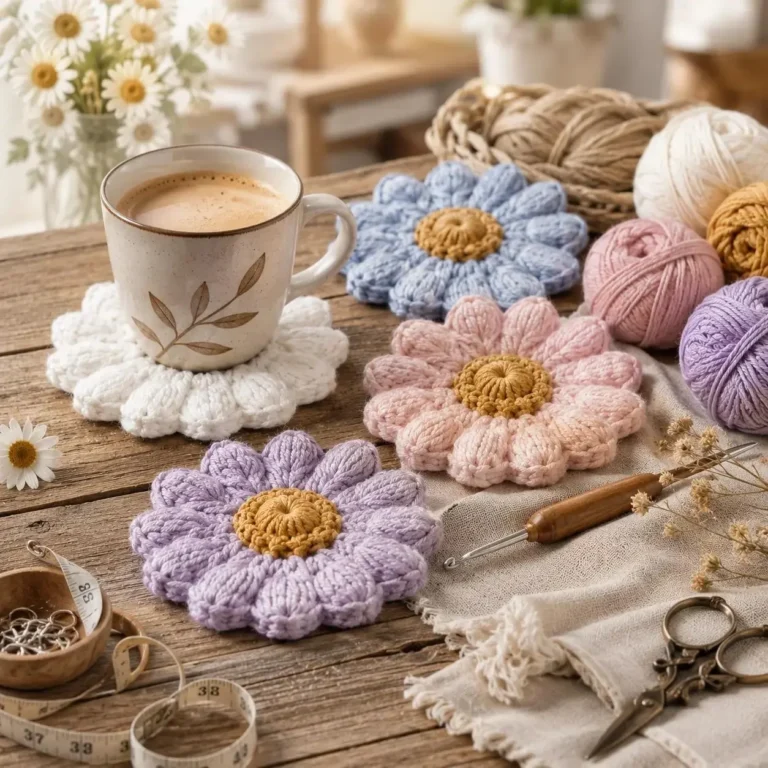
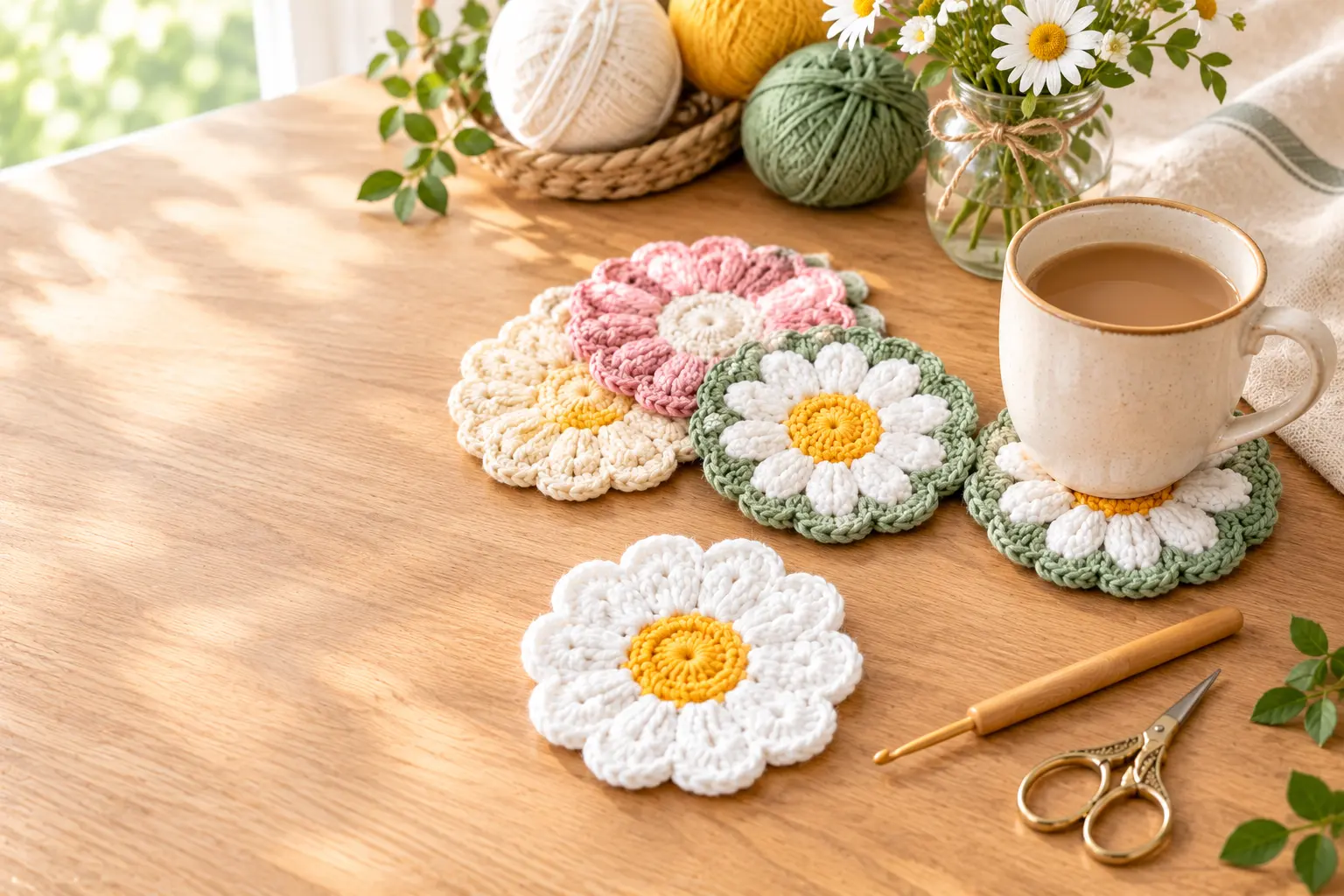
Bring a little handmade sunshine to your home with a Daisy Flower Coaster! This cheerful crochet project adds a sweet floral touch to your coffee table, desk, or kitchen while giving you a fun way to practice your crochet skills. Whether you are new to crochet or already have a basket full of yarn scraps, a daisy coaster is a lovely project to make in your favorite colors.
In this guide, you will discover the materials you need, helpful tips for creating neat petals, and simple steps to follow as you work on your flower coaster. You will also learn how to customize your design and care for your finished piece. Follow along with the free pattern and video tutorial once you add your tested instructions and matching video.
Why You’ll Love This Daisy Flower Coaster
A crochet flower coaster is more than a practical accessory. It is a small handmade detail that can make an ordinary space feel warmer and more inviting.
Here are a few reasons to try this project:
- Beginner-friendly practice: You can practice basic crochet stitches, working in rounds, and keeping your tension consistent.
- Quick and satisfying: A small project gives you the chance to finish something beautiful without committing to a large blanket or garment.
- Perfect for leftover yarn: Use small amounts of yellow, white, cream, or other colors already in your stash.
- Lovely handmade gifts: Make a set for birthdays, housewarmings, teacher gifts, or thoughtful additions to a gift basket.
- Easy to personalize: Change the petal color, center shade, or finishing details to match your home décor.
If you enjoy making useful crochet items with a decorative twist, this Daisy Flower Coaster is a wonderful project to add to your handmade collection.
Daisy Flower Coaster Pattern at a Glance
Before you begin, review the project details so you can prepare your materials and workspace.
| Project detail | Information |
|---|---|
| Project type | Crochet flower coaster |
| Skill level | Beginner-friendly |
| Main techniques | Basic stitches, working in rounds, finishing |
| Suggested colors | Yellow center with white or cream petals |
| Yarn | Cotton yarn is a practical choice |
| Hook size | Use the size specified in your tested pattern |
| Finished size | Depends on your stitch pattern and yarn |
| Pattern format | Written instructions and video tutorial |
Helpful note: Your final coaster size depends on the yarn, hook, stitch tension, and pattern construction. Add the tested dimensions and exact stitch instructions to your published pattern.
Materials You’ll Need
Gather your supplies before starting. Having everything nearby makes it easier to focus on your stitches and enjoy the process.
| Material | Purpose |
|---|---|
| Yellow yarn | Creates the daisy center |
| White or cream yarn | Forms the petals |
| Optional accent yarn | Adds a colorful or decorative variation |
| Crochet hook | Use the size recommended by your pattern |
| Scissors | For cutting yarn |
| Yarn needle | For weaving in loose ends |
| Stitch marker | Helps mark the beginning of a round when needed |
Choosing the Right Yarn
Cotton yarn is often a good option for a crochet coaster because it is absorbent, holds its shape well, and usually handles everyday use better than delicate fibers. A smooth yarn also makes your stitches easier to see, which is especially helpful when you are learning.
Choose yellow for the center and white for classic daisy petals. For a softer look, try cream petals with a pale yellow center. Pastel pink, lavender, or baby blue petals can give your coaster a playful, modern style.
For the best results, use a similar yarn weight for all colors. Significant differences in thickness may cause the flower to look uneven or make some petals larger than others.
How to Crochet a Daisy Flower Coaster
The following steps provide an overview of the construction process. Add your complete, tested stitch-by-stitch pattern—including stitch counts, round instructions, and any special techniques—before publishing this section as a ready-to-follow free pattern.
Step 1: Crochet the Daisy Center
Start with the yellow yarn and follow your pattern to create the center of the flower. Depending on the design, this may involve working in a small circle or forming a flat central shape.
Keep your stitches consistent as you work. If your tension is too tight, the center may curl or become difficult to work into. If it is too loose, the center may look uneven.
Check that your center lies reasonably flat before moving on to the petals.
Step 2: Create the Flower Petals
Once the center is complete, attach the petal yarn according to your instructions. Work each petal carefully, following the specified stitch sequence and placement.
Try to maintain the same tension throughout every petal. Consistent stitches help the flower look balanced and prevent some petals from appearing longer or wider than others.
If you are a beginner, take your time. Count stitches when instructed and pause occasionally to check that the petals are forming evenly around the center.
Step 3: Complete the Flower Shape
Continue until you have completed all the petals required by your pattern. Lay the coaster on a flat surface and look at its overall shape.
A finished daisy coaster should sit comfortably on a table without excessive curling or rippling. Small differences in tension can affect the finished shape, so make any necessary adjustments according to your pattern’s guidance.
Step 4: Finish and Weave in the Ends
Cut the yarn as directed, leaving enough length to secure each end. Use your yarn needle to weave the loose ends neatly into the back of the work.
Avoid leaving loose strands where they may catch on cups, fingers, or other objects. Check the edges and petals, then gently arrange the flower so it looks tidy.
If your pattern recommends blocking, follow its care instructions to help the coaster lie flat.
Watch the Daisy Flower Coaster Video Tutorial
A video tutorial can make a new crochet technique much easier to understand. You can watch how the yarn is held, where the hook enters each stitch, and how the petals take shape.
When adding your video to this article, choose one that matches the written pattern exactly. The yarn, stitch sequence, round structure, and finishing method should correspond to the instructions on the page.
As you follow along:
- Keep your yarn and hook ready before starting the video.
- Pause after each round or petal to check your work.
- Replay any stitch you find confusing.
- Compare your progress with the demonstrated result before continuing.
The video should support the written pattern rather than replace important stitch counts or instructions.
Tips for a Neat, Beautiful Daisy Coaster
A few simple habits can help your finished flower look more polished.
- Keep your tension consistent. Try not to pull the yarn too tightly, especially when working the petals.
- Count when necessary. Following the correct stitch count helps keep the flower balanced.
- Choose suitable yarn. Smooth cotton yarn makes stitches easier to see and is practical for everyday coasters.
- Weave in ends securely. Neat finishing gives your project a professional appearance.
- Check the shape as you go. If the coaster begins to curl or ripple, review your tension and compare your work with the pattern before continuing.
Troubleshooting Common Problems
| Problem | What to check |
|---|---|
| The coaster curls | Review your tension, stitch count, and hook size against the pattern. |
| The coaster ripples | Check whether you have too many stitches or loose tension. |
| The petals look uneven | Count carefully and keep the tension consistent. |
| The center looks bulky | Check your stitch placement and the yarn thickness. |
| Loose ends show | Weave them securely into the back of the finished piece. |
Do not immediately undo several rounds if something looks wrong. First, compare your stitches with the instructions to identify where the shape began to change.
Creative Ways to Customize Your Crochet Daisy
One of the best things about making a Daisy Flower Coaster is how easily you can personalize it.
For a classic look, choose a yellow center and white petals. If you prefer a softer palette, combine cream and pale yellow. Bright pink, orange, purple, and blue can create cheerful flowers that stand out on a neutral table.
You can also make several matching coasters in different colors. A coordinated set looks attractive on a coffee table and makes a thoughtful handmade gift. For a spring-inspired display, pair your flowers with a crochet basket or other small handmade accessories.
If you are using leftover yarn, choose colors of similar thickness so your coasters have a consistent shape and feel.
How to Care for Your Crochet Flower Coaster
Your coaster may need occasional cleaning, especially if you use it for everyday drinks. Always check the yarn label and follow the care recommendations for your chosen fiber.
Cotton projects may often be washed gently, but the correct method depends on the yarn. Avoid harsh cleaning methods that could stretch the petals or distort the flower. Reshape the coaster gently after washing and let it dry according to the yarn’s care instructions.
Frequently Asked Questions
Is the Daisy Flower Coaster suitable for beginners?
Yes, this project can be beginner-friendly if it uses basic stitches and clear instructions. Working in rounds and shaping the petals may take practice, so follow the written pattern and video tutorial at your own pace.
What yarn is best for a crochet daisy coaster?
Cotton yarn is a practical choice because it is absorbent and holds its shape well. Smooth yarn also helps you see individual stitches clearly.
How long does it take to crochet a daisy coaster?
The time varies with your experience, stitch pattern, and the complexity of the petals. Since a coaster is a small project, it can be a satisfying choice when you want to make something decorative without starting a large item.
Can I use leftover yarn?
Absolutely! Small amounts of yarn are often enough for the center and petals. Choose compatible yarn weights to help your finished flower stay balanced.
Why is my crochet coaster curling or rippling?
Curling can result from tight tension or a shape that needs additional ease. Rippling may indicate extra stitches or loose tension. Check your stitch counts, hook size, and pattern instructions before making changes.
Can I make a matching set?
Yes. Make several coasters in the same colors for a coordinated look, or use different petal colors to create a cheerful collection.
Final Thoughts
A Daisy Flower Coaster is a charming way to practice crochet while creating something useful for your home. With a few basic supplies, your favorite yarn colors, and a little patience, you can make a floral accessory that brightens your table or becomes a thoughtful handmade gift.
Ready to pick up your hook? Visit www.crochetwhisper.com for more crochet inspiration, explore the free pattern, and follow the matching video tutorial as you create your own daisy. When your coaster is finished, try another color combination or make a complete set to share with someone who loves handmade treasures.